A strongly worded dare
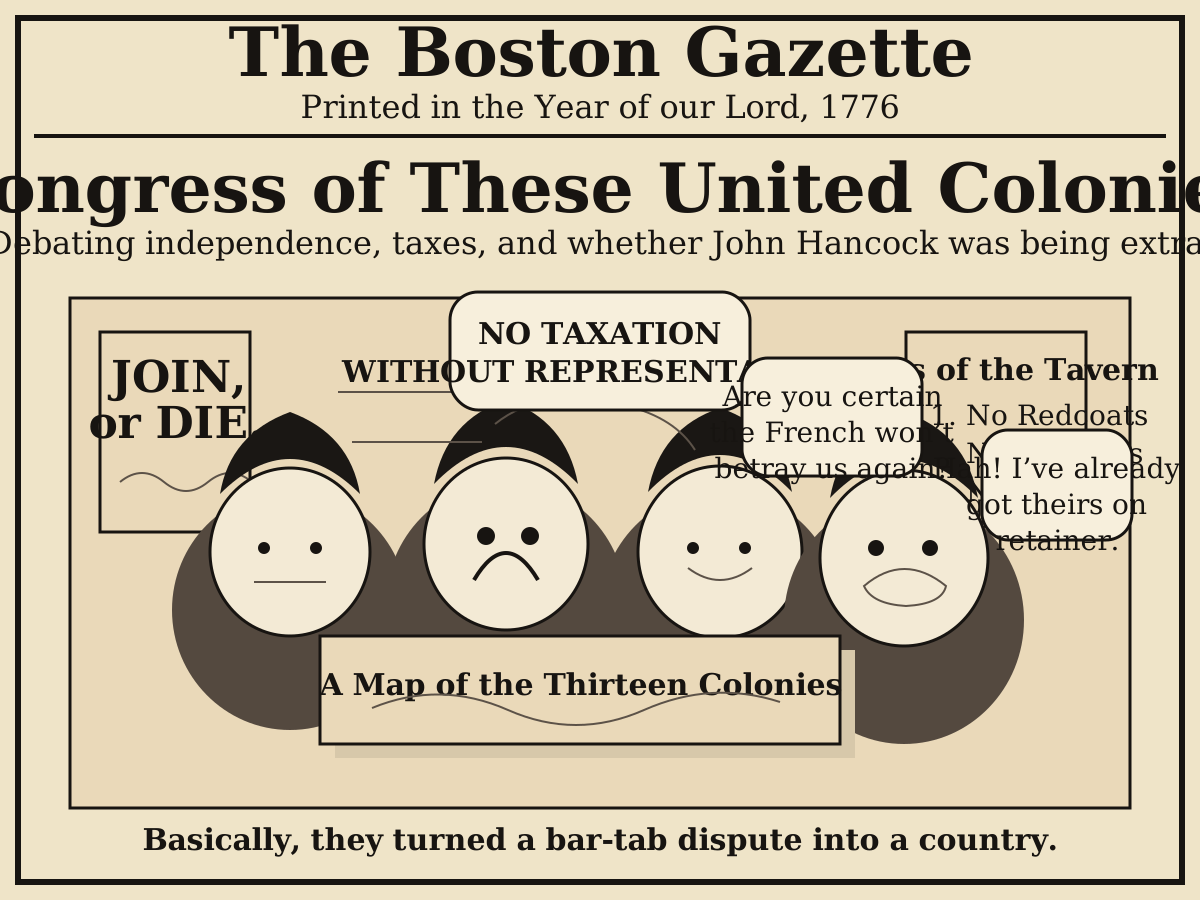
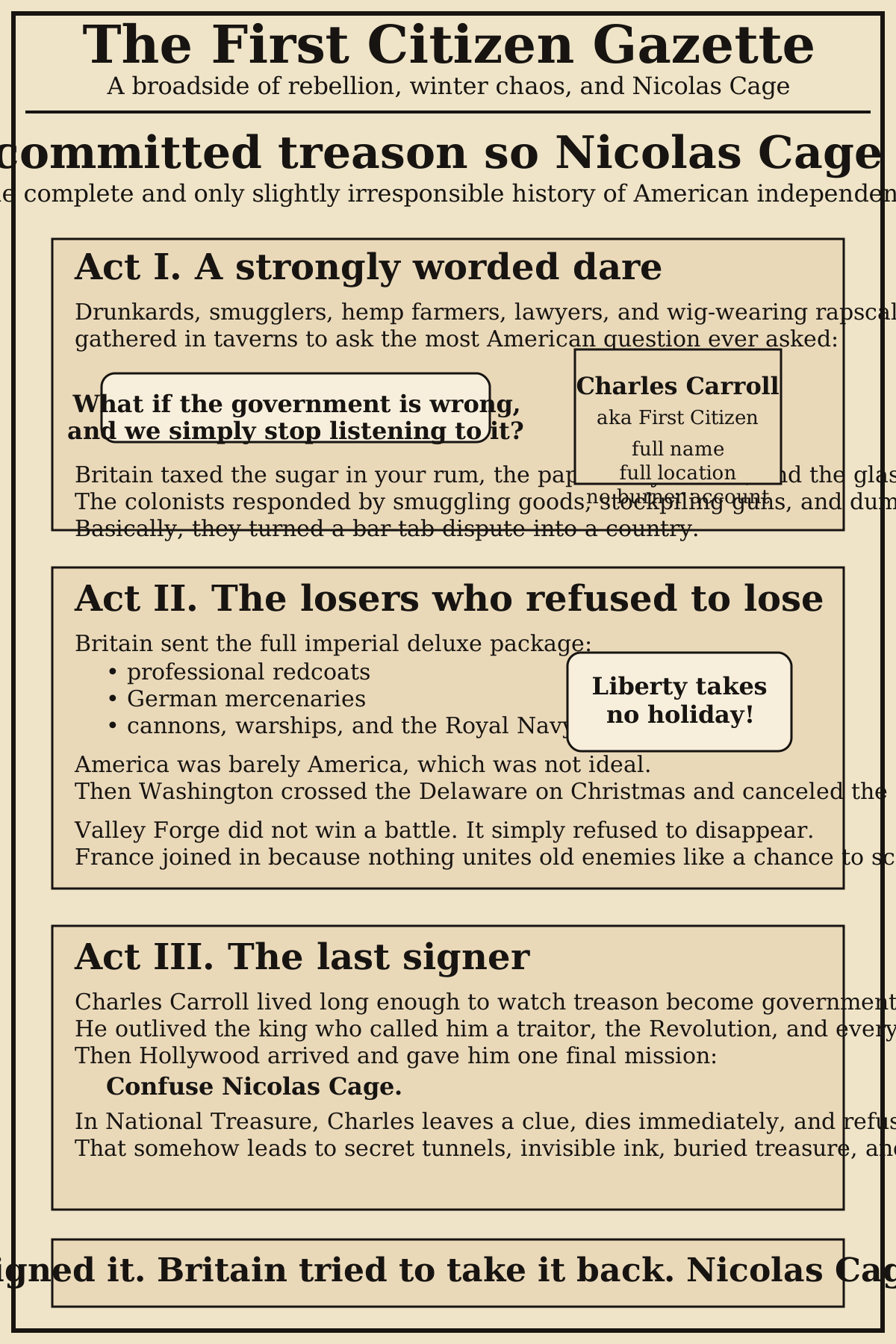
Two hundred and fifty years ago, a collection of drunkards, hemp farmers, smugglers, lawyers, soldiers, and wig-wearing rapscallions gathered in taverns to discuss the most American question ever asked:
“What if the government is wrong, and we simply stop listening to it?”
Britain taxed the sugar going into your rum.
The paper your tab was written on.
The glass you were drinking from.
Even the paint on the tavern sign outside.
The problem was not simply that taxes existed.
The problem was that men three thousand miles away, whom the colonists could not vote for, kept reaching across the ocean and taking money from their drinks.
The colonists responded in the calm and responsible manner for which Americans have always been known.
They smuggled molasses and tea.
They stockpiled muskets and gunpowder.
They grew hemp for rope.
Sure.
Rope.
They harassed tax collectors, raided British supplies, formed illegal governments, and dumped an entire shipment of tea into Boston Harbor.
We drink coffee, damn it.
Basically, they turned a bar-tab dispute into a country.
One of those men was my ancestor, Charles Carroll of Carrollton.
Before the Revolution, Charles attacked British rule in newspaper essays under the secret superhero identity:
First Citizen.
Everybody knew it was Charles.
Maryland had instructed its delegates not to support independence.
Maryland was still standing near the door saying:
“I don’t know. This seems dangerous.”
Charles slammed down his mug.
“Get in the carriage! We’re committing treason! Let’s gooooo!”
On July 4, 1776, Congress wrote a dare to the most powerful empire on Earth.
Thirteen poorly coordinated colonies, with very little money, almost no navy, and an army that occasionally went home to harvest hemp... for rope, informed Britain that they no longer needed some asshole king telling them what to do.
The Declaration said people were born with rights no king could give them and no government had the moral authority to take away.
Charles had spent years hiding behind his secret superhero name.
But when it came time to sign the confession, he used:
Charles Carroll of Carrollton.
Fifty-six men had just mailed King George a confession to treason.
If Britain won, they were not getting a fine.
They were getting a rope.
They signed anyway.
The losers who refused to lose
The British did not read the Declaration and say:
“Fair enough. We appreciate the feedback.”
King George sent the full imperial deluxe package.
Britain had spent generations building the most powerful empire on Earth. Now it was bringing the smoke directly to America’s front door.
America was barely America.
The colonies disagreed about money, supplies, strategy, leadership, enlistments, and whether this entire independence idea had gotten slightly out of hand.
Washington lost New York.
His army retreated across New Jersey.
Men deserted.
Enlistments expired.
The Revolution nearly ended before the new country even had a name.
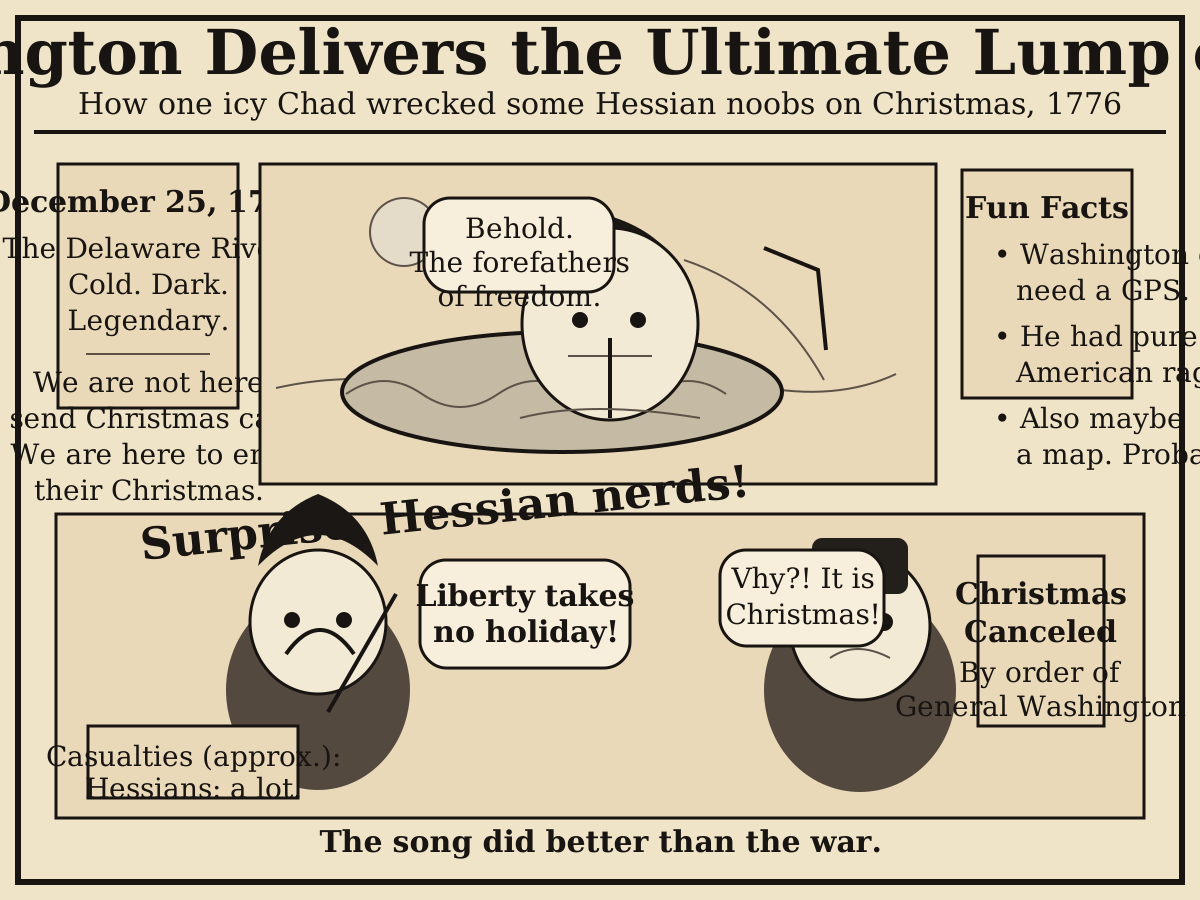
Then, on Christmas night, Washington loaded freezing soldiers and artillery into boats and crossed the Delaware River.
Santa came early.
It was his turn to bring the smoke.
Christmas was canceled for the Hessians.
That was not Santa on the rooftop.
It was motherfucking George Washington with a full company of artillery, ready to rip you out of bed and stack bodies like timber.
The victory at Trenton did not win the war.
It reminded the Americans that winning was still technically available.
Our greatest advantage was not that we were impossible to beat.
We were just Bruce Willis in Die Hard levels of hard to kill.
Charles Carroll served in the Continental Congress and helped keep Maryland behind the Revolution.
He placed his wealth, influence, reputation, and extremely traceable signature behind a country that did not technically exist yet.
The Americans kept fighting.
They fought after defeats.
They fought through hunger, disease, freezing winters, empty treasuries, and a government whose financial strategy was frequently:
“Does anybody here know a rich French person?”
“Benjamin?”
At Valley Forge, Washington’s army did not win a battle.
It simply refused to disappear.
That may be the most American victory of all.
Eventually, France joined the war, because nothing brings old enemies together like a shared opportunity to fuck over Britain.
French ships blocked the escape.
French soldiers and American troops surrounded Yorktown.
Washington refused to quit with such consistency that it became a military strategy.
The British surrendered to the colonists they had expected to crush easily.
The founders did not keep their promise for everyone.
But they wrote it down where nobody could ever unsee it.
For 250 years, Americans have kept fighting to make “all men are created equal” include the people the first draft left out.
Then, thirty years later, Britain came back for the sequel.
Like most sequels, it was bound to flop.
It was such a box-office bomb that Francis Scott Key wrote a song about it while being held aboard a ship as a captive spectator.
The song did better than the war.
But when the smoke cleared over Fort McHenry, the American flag was still there.
The young country had survived the sequel.
The last signer
Charles Carroll lived long enough to watch treason become government policy.
The illegal colonial congress became the United States Congress.
The rebellion became history.
The thirteen colonies became a country nobody could make leave.
The Carroll family kept appearing in the credits.
Charles’s cousin Daniel signed the Constitution.
Daniel’s brother John became America’s first Catholic bishop and helped establish Georgetown.
One by one, the other signers died.
Charles kept winning the contest by continuing not to die.
By 1832, he was 95 years old and the last surviving signer of the Declaration of Independence.
He had outlived the king who declared him a traitor.
He had outlived the Revolution.
He had outlived every other man whose name appeared beside his.
He had lived long enough to see the impossible become normal.
That is what we celebrate on the Fourth of July.
America was not handed to us.
It was fought for by people who were outnumbered, outspent, underfed, badly organized, and frequently losing.
They kept going.
Every generation after them kept going too.
We inherited more than a country.
We inherited a dare:
We are lucky as hell to live here.
Not because America has always been perfect.
Because Americans have never accepted that imperfect was the best we could do.
And that should have been the end of Charles Carroll’s story.
But Hollywood was not finished.
Like an end-credit scene, Ol’ Charles “First Citizen” Carroll of Carrollton had one final hand left to play:
Confuse Nicolas Cage.
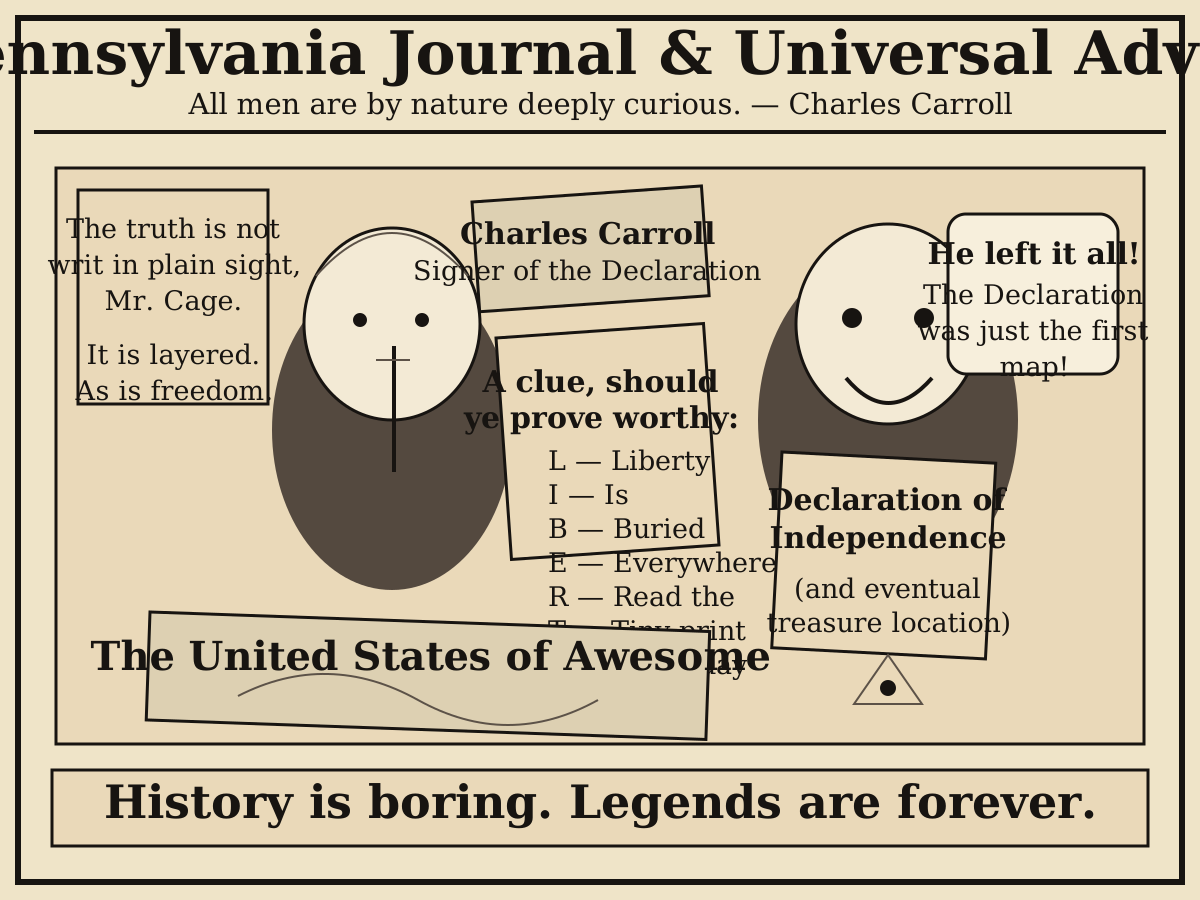
In National Treasure, a dying Charles gives the Gates family one mysterious clue:
“The secret lies with Charlotte.”
Then he dies without answering a single reasonable follow-up question.
Classic Carroll.
That clue launches a 200-year conspiracy involving Freemasons, invisible ink, buried treasure, secret tunnels, and Nicolas Cage stealing the Declaration of Independence.
The movie got one thing right.
The Declaration is a treasure.
Not because there is an invisible map on the back.
Because ordinary people once risked everything on the idea that government belongs to us.
The illustrated edition
For readers who prefer their American history with more chaos, more engraving, and fewer footnotes.